
Where do you swim, walk, snorkel, sail etc?
In February, we will begin assembling the final action plan for Restore the Bay. It is intended that this be used to guide public policy and decision-making, affecting our activities and the way we interact with our local area.
Restore the Bay’s final output will be a stewardship plan, that includes an interpretation of the values and threats, plus the actions you believe will improve over 5, 10, 15 or more years, and how to get there.
If you have not had chance to engage with the project yet, now would be an ideal time. This is your chance to have a say in what happens next, as well as ensure your interests are properly represented.
PLEASE SHARE THIS INFORMATION WITH ANYONE YOU THINK NEEDS TO HAVE A SAY
If you have questions, please email info@restorethebay.org.au. Better still, sign up to our workshops - these begin 7 February and 17 February from 10-1pm at the Ecocentre, St Kilda.
Where do you act?
As a result of our public engagement so far, we have the data to demonstrate which ecosystem features support the greatest amount of community value. This is why we have a strong local economy. The penultimate part of this project is to map where you do your activities because this is how we connect with those values. This combination of knowledge means we can put forward rigorously assessed recommendations that are socially prioritised, ecologically viable and are likely to result in measurable positive impact for our local community.
Are these maps correct?
The following maps are based on observations and discussions so far. Should you wish to add or amend these, you can contact us through this online form or email us at info@restorethebay.org.au.
Walking (General) including with pets
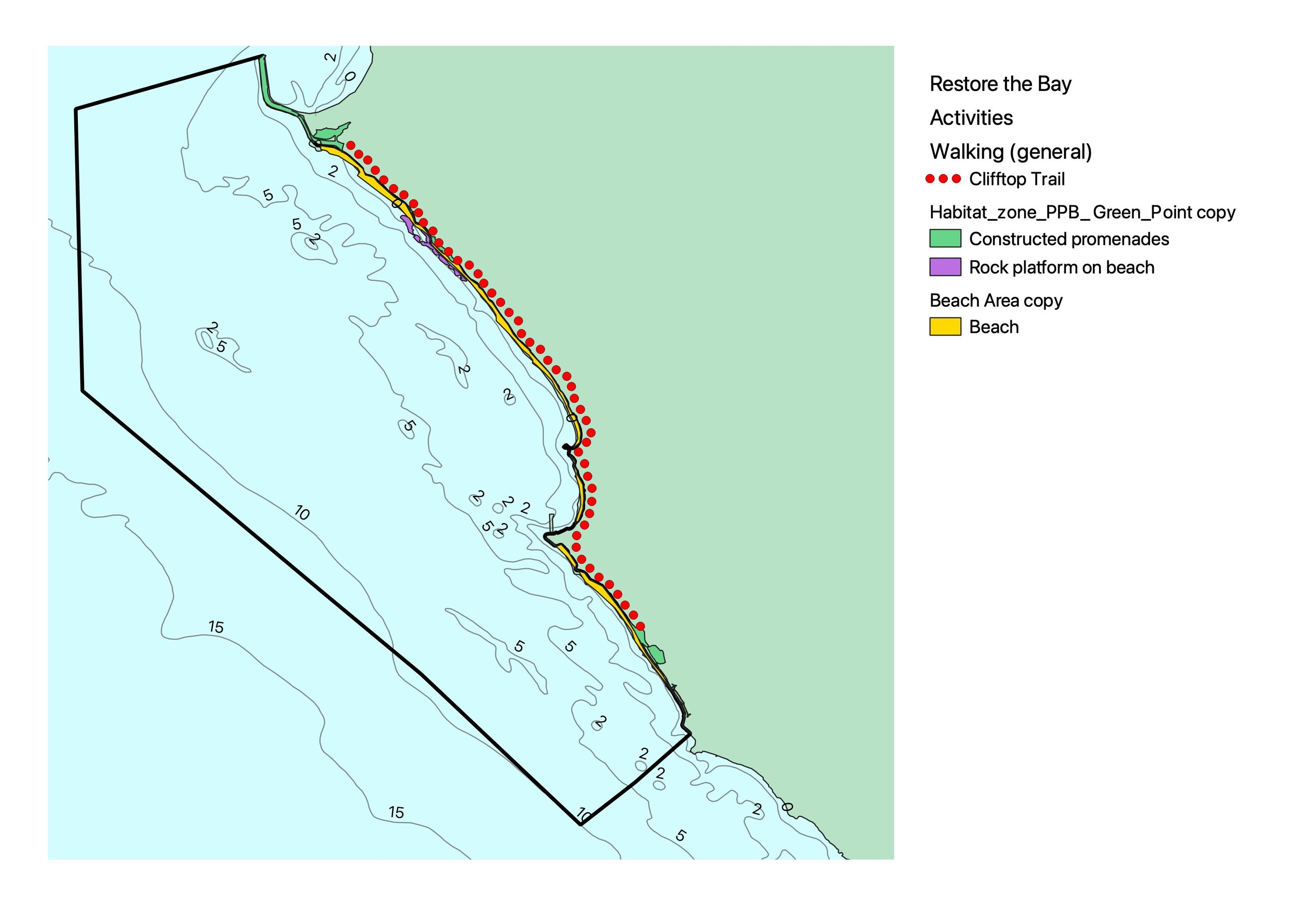
Based on published research on the distances people will walk from car parks on beaches, there is not much difference in the scale of use across the whole of the area.
Paragliding
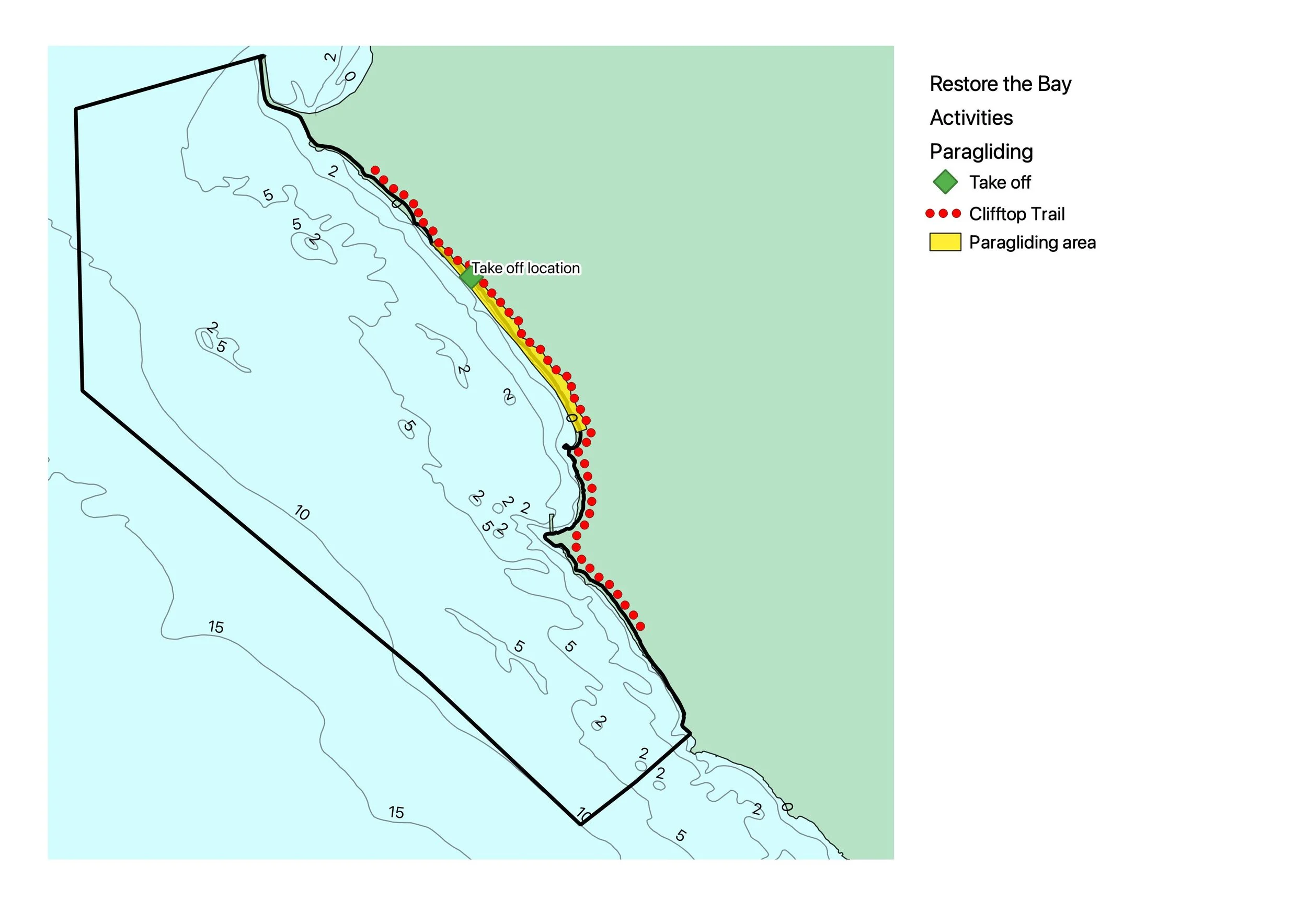
Add your comments through this online form or email us at info@restorethebay.org.au.
SUP or kayak
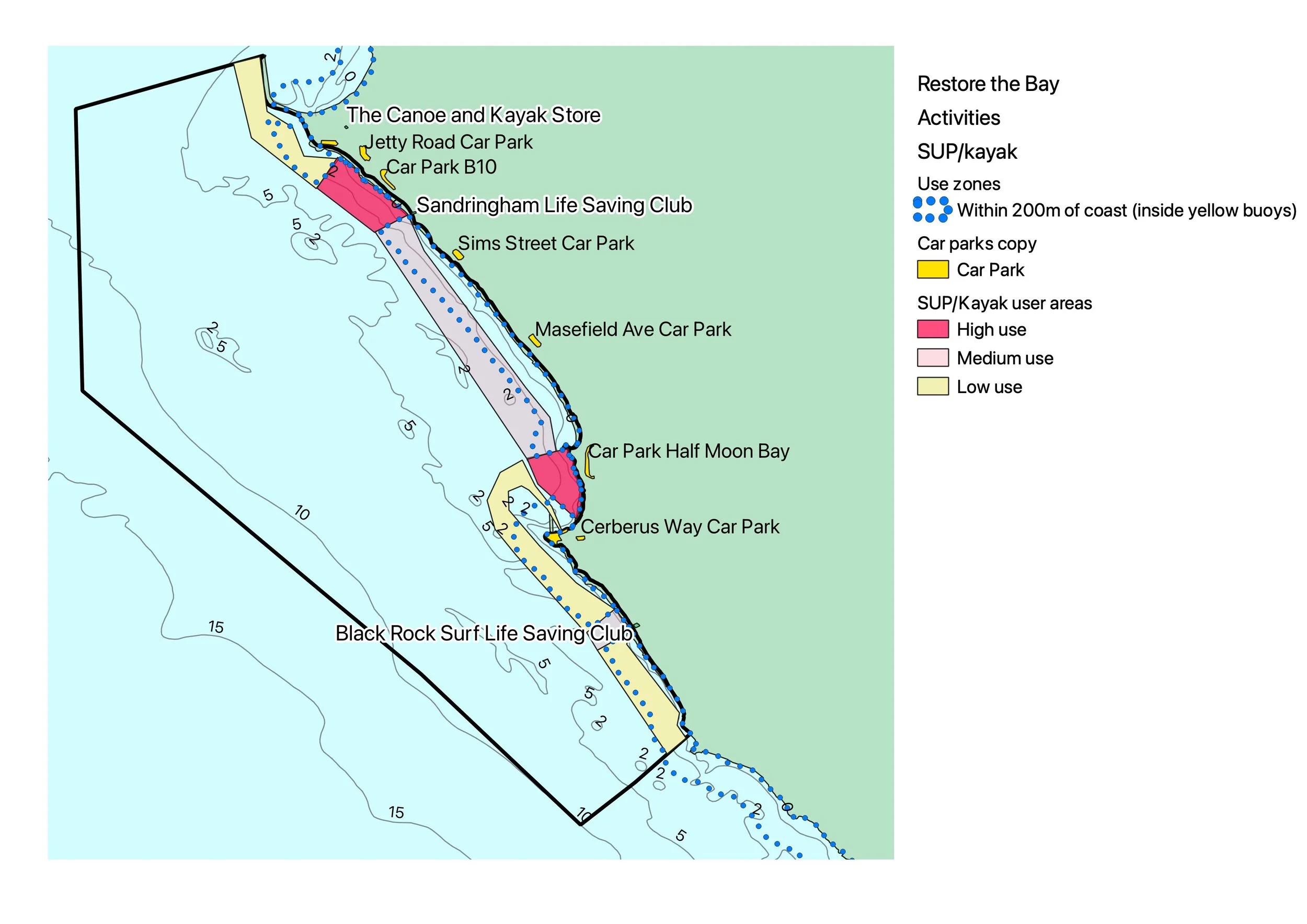
Add your comments through this online form or email us at info@restorethebay.org.au.
Beach going
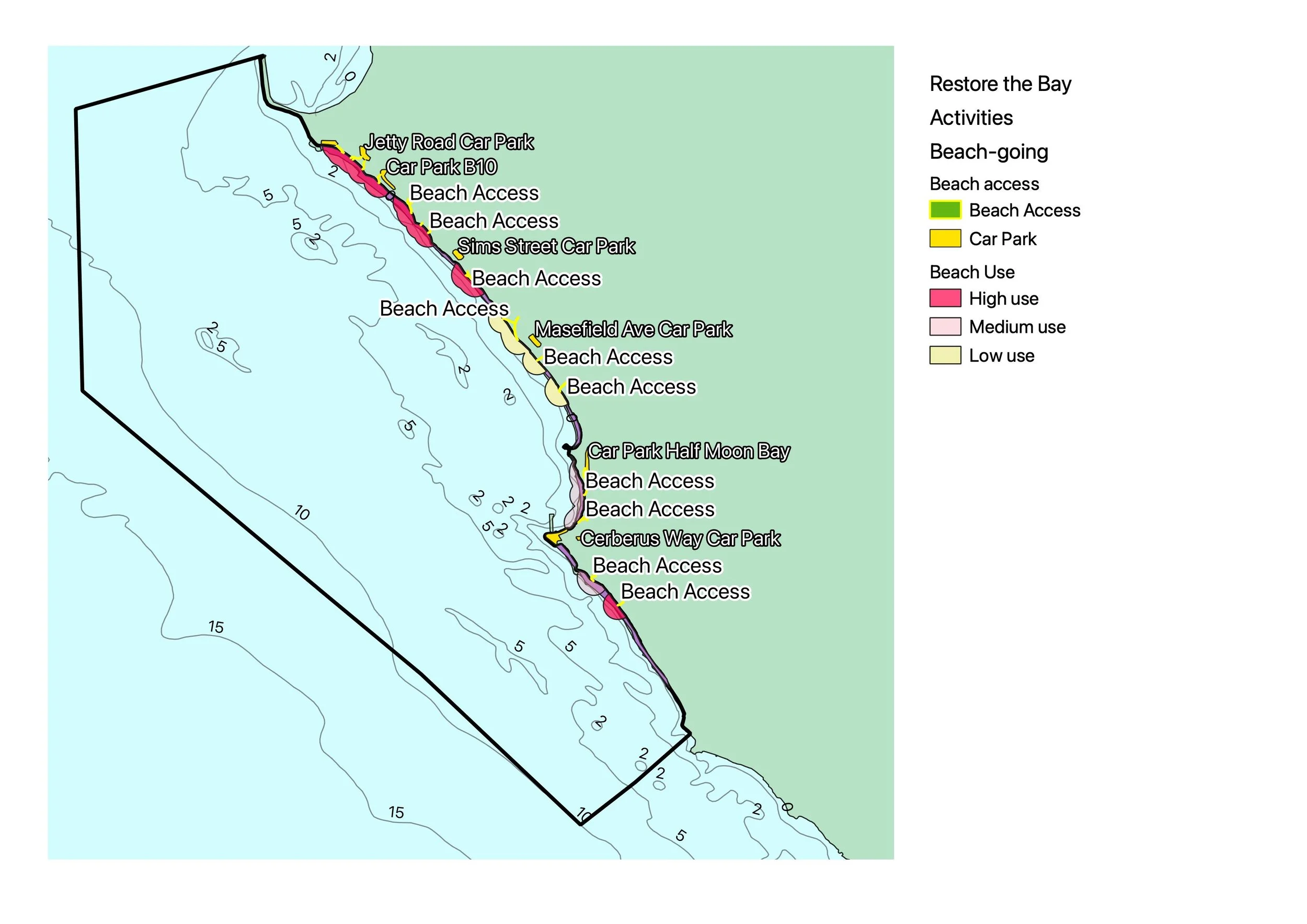
This does not include walking. This is confined to visiting the beach for recreational purposes.
Sailing
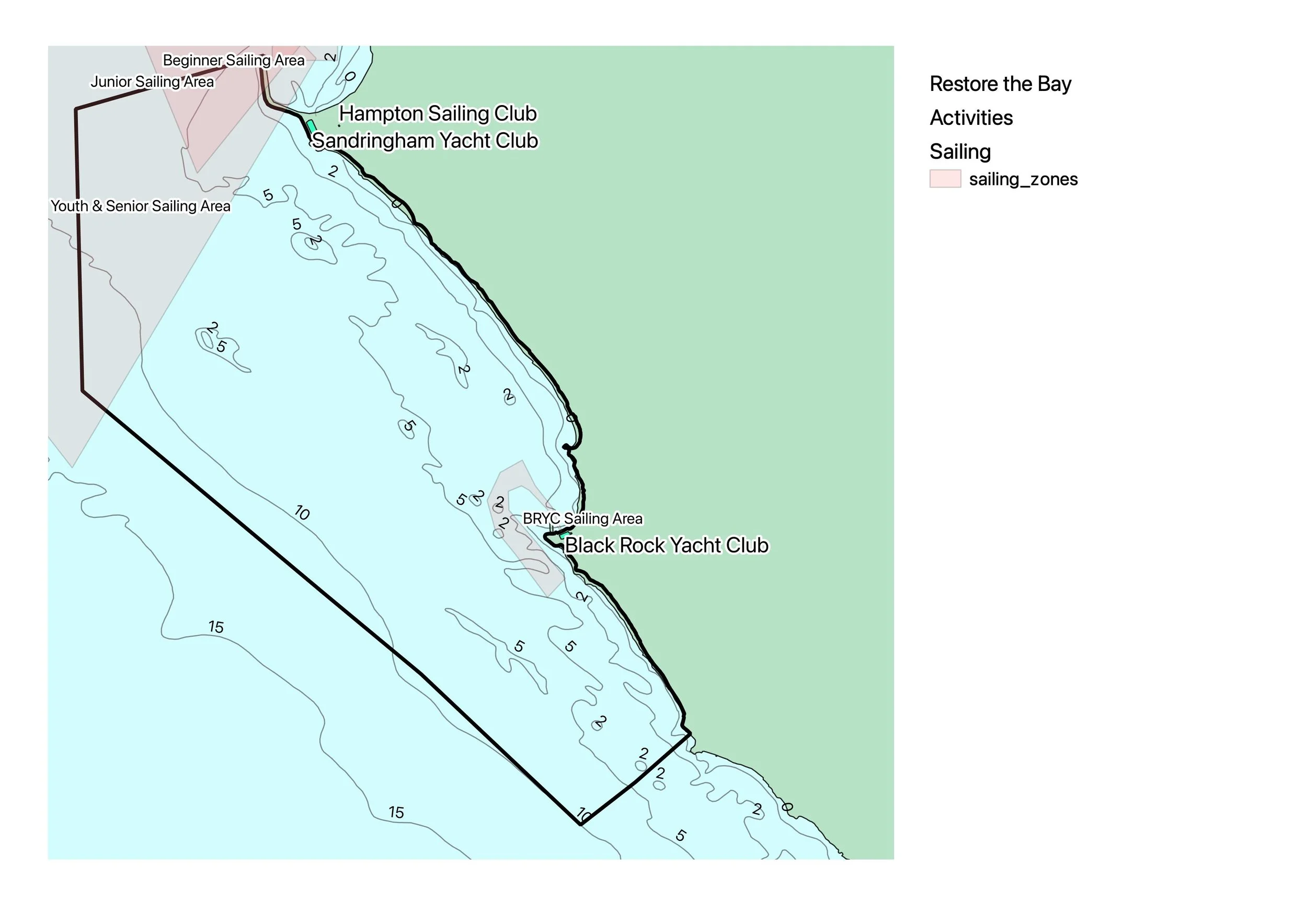
Add your comments through this online form or email us at info@restorethebay.org.au.
Fossil hunting
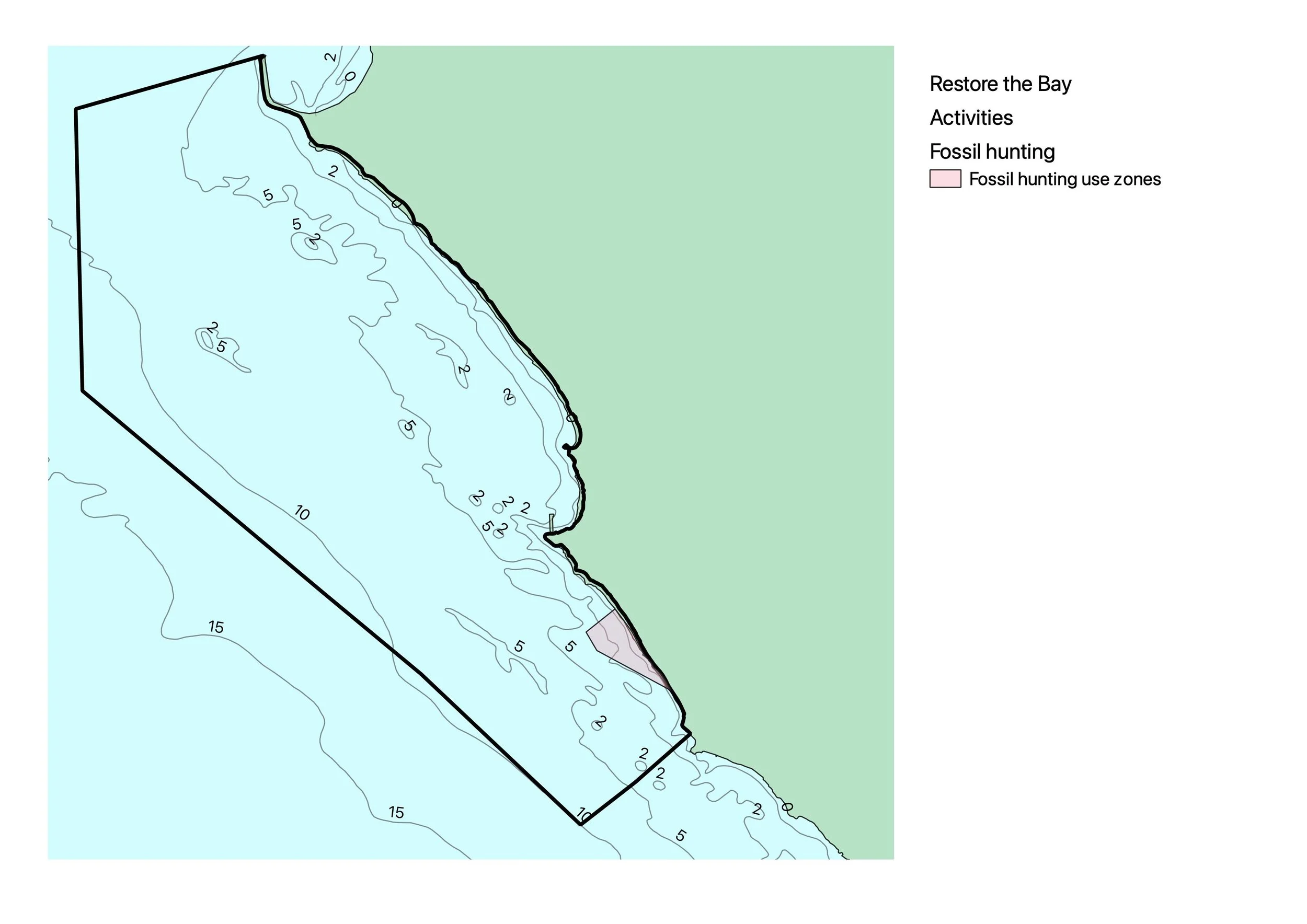
Add your comments through this online form or email us at info@restorethebay.org.au.
Ocean swimming / surf life saving
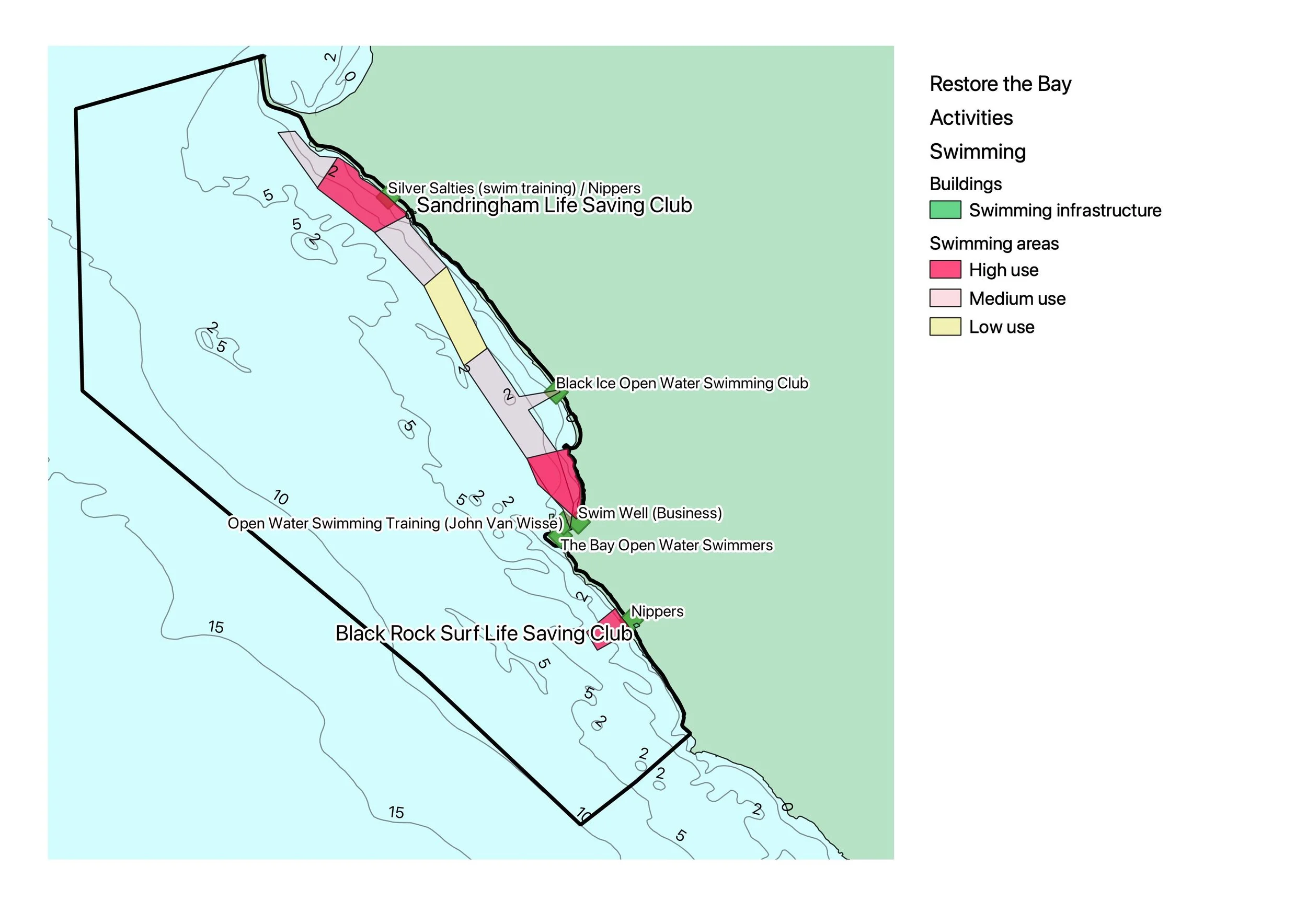
Add your comments through this online form or email us at info@restorethebay.org.au.
Snorkelling
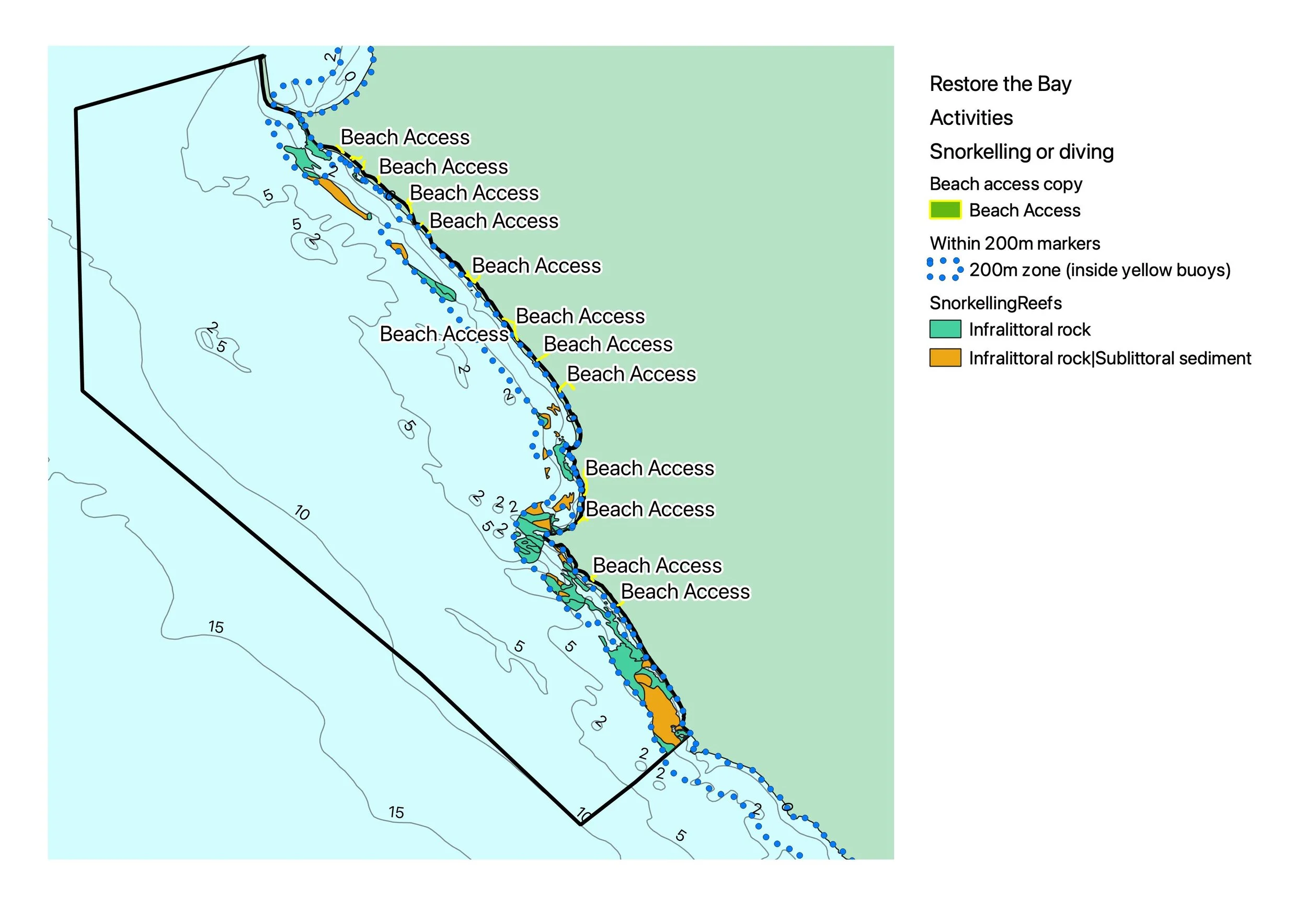
Snorkelling and diving tend to be associated with reefs. It’s presumed that the majority of this would occur in Half Moon Bay with some lower use areas off Sandringham Life Saving Club.
Add your comments through this online form or email us at info@restorethebay.org.au.
Sightseeing
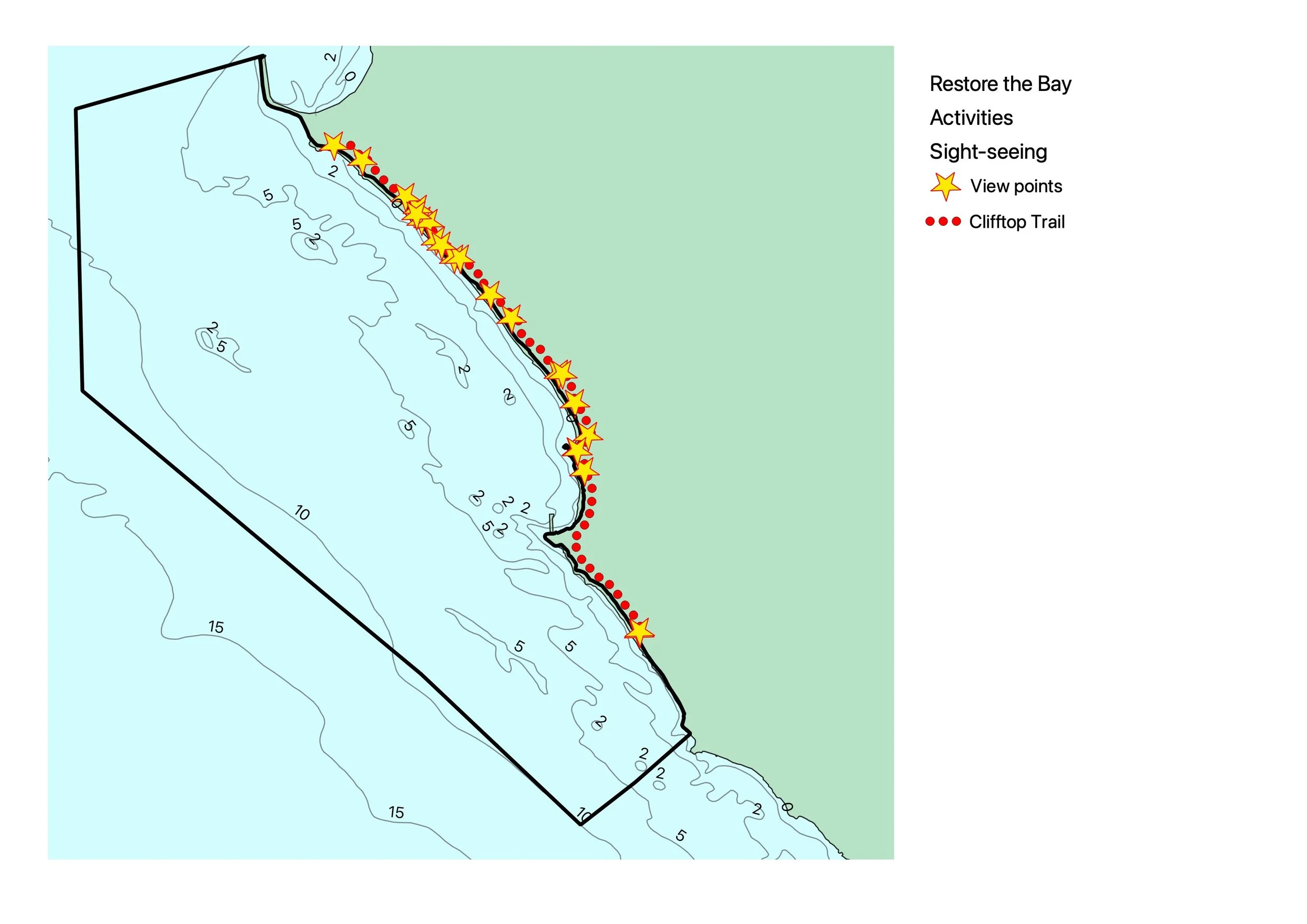
Add your comments through this online form or email us at info@restorethebay.org.au.
Cultural Heritage
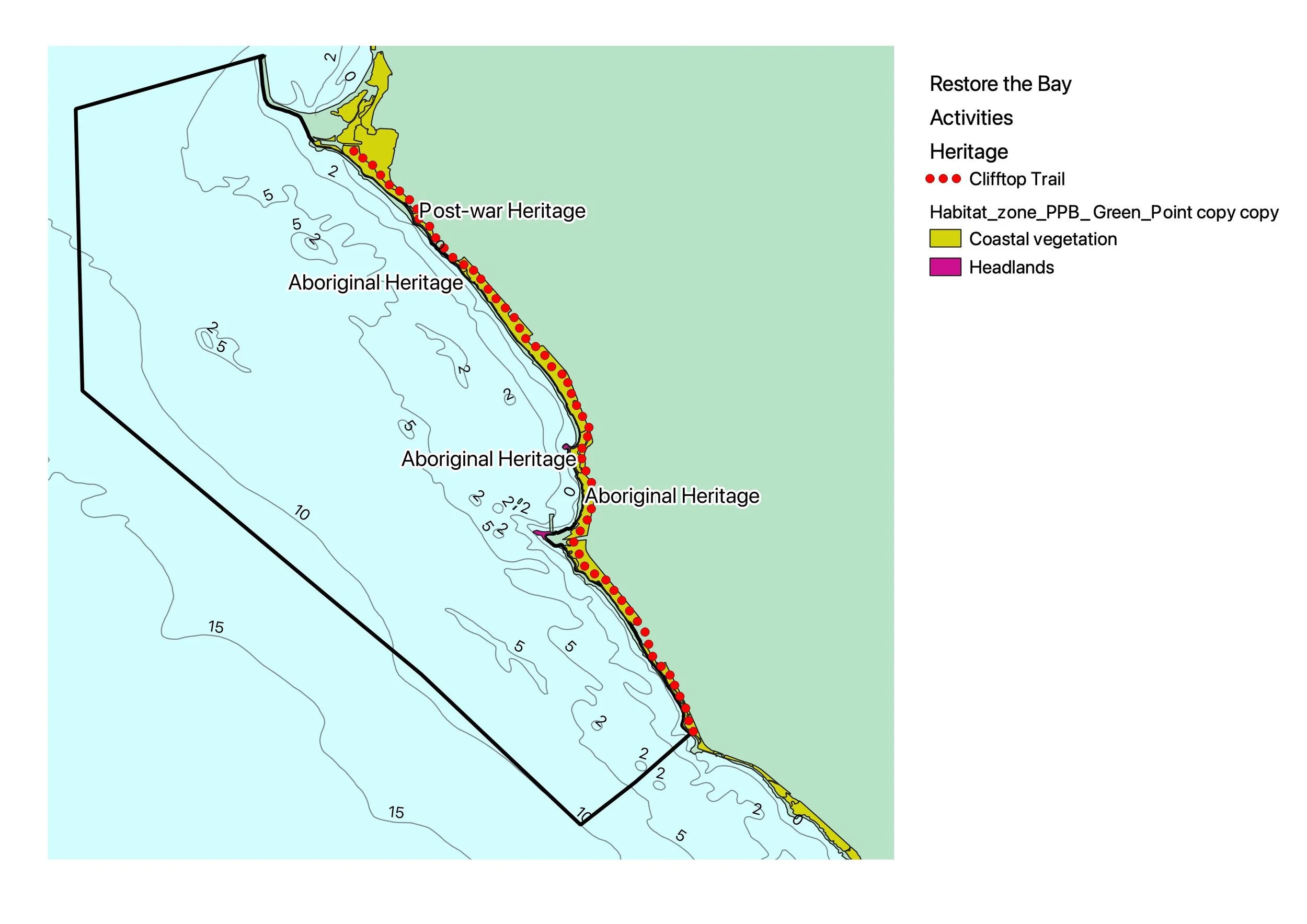
This map is by no means comprehensive. The entire area was used by traditional owners as recently as the 1870s. It’s likely that they gathered in similar places and for similar reasons as Australians do now. Given the significance of this area today, the whole coastline including areas at and beneath the sea encompasses the values and needs of traditional owners. Immediately along the coast there are also areas of post-European heritage, including the promenades at Sandringham Life Saving Club built by soldiers returning from war.
Add your comments through this online form or email us at info@restorethebay.org.au.